
Why kids aged 8–16 should start Strength & Conditioning
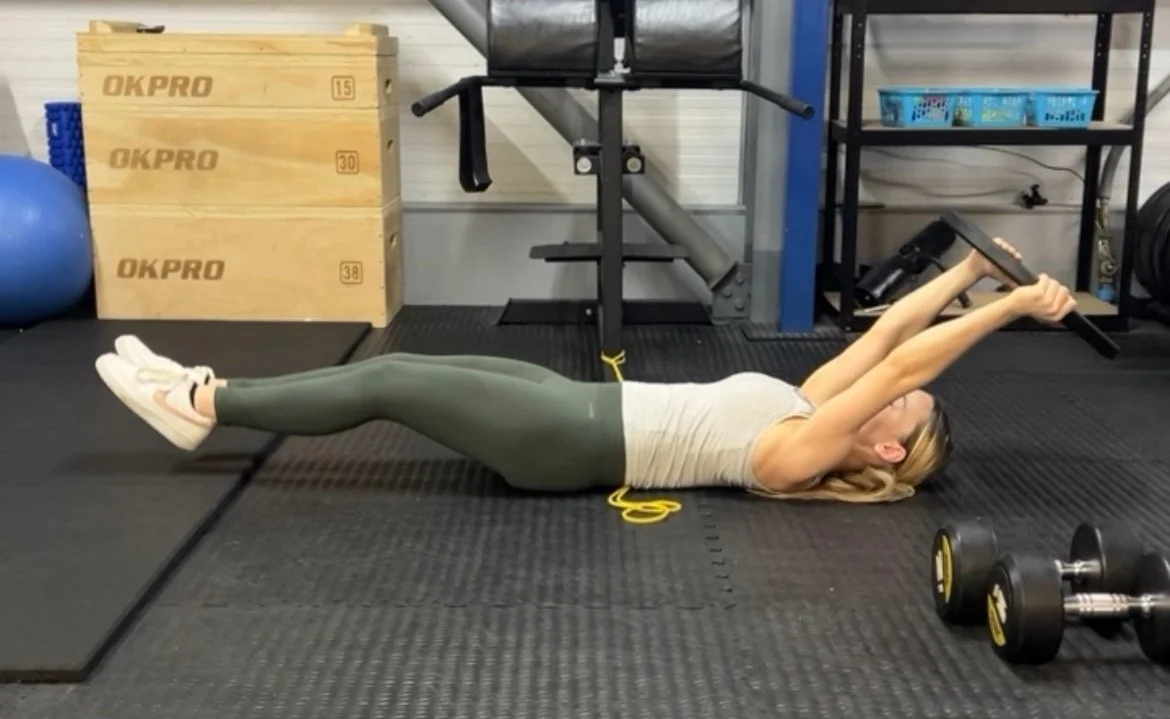
Abi working on deep core stabilisers, teaching her body how to be strong in a neutral spine and transmit power from her legs and arms effectively.
Kids who participate in strength and conditioning (S&C) are stronger, more resilient, more confident, and better prepared for both sport and everyday life. From improved coordination and injury prevention to enhanced mental wellbeing and long-term healthy habits, S&C provides a foundation for lifelong movement and confidence.
When delivered safely and by qualified coaches, S&C for children aged 8–16 develops not just physical strength but also movement skills, self-belief, and resilience. It’s not about heavy lifting or bodybuilding, it’s about learning how to move well, challenge the body appropriately, and enjoy getting stronger in a structured, supportive environment.
According to the UK Strength and Conditioning Association (UKSCA) Position Stand on Youth Resistance Training (2014), strength training for young people is both safe and beneficial when properly supervised. The statement emphasises the role of qualified coaches in creating age-appropriate, progressive programmes that enhance both health and athleticism. These findings align with global consensus statements from the National Strength and Conditioning Association (NSCA) and other peer-reviewed reviews (e.g. Faigenbaum et al., 2009; Chaabene et al., 2020).
What we mean by S&C for kids
For children, good S&C focuses on:
Movement competence - how do we move safely and optimally to reduce injuries and maximise the outcome (e.g. running, jumping, landing, squatting, pushing, pulling)
Progressive strength training - from bodyweight or light bands to using free weights once technique is fine-tuned, and then gradually increasing loads starting with light dumbbells
Balance, coordination and agility - developing fundamentals of movement
Basic speed and plyometric training - incorporating jumps and speed drills to teach the body to move faster and develop more power
Fun, age-appropriate games and challenges - making the gym fun while working hard and developing lifelong physical activity habits
It’s not: pushing maximal loads, encouraging early specialisation, or ignoring growth and maturation.
Why start at 8–16? The benefits parents should know about
Below are the main benefits relevant to parents who want their children to be healthy, confident and resilient.
1. Better movement skills and lower injury risk
Programmes that teach proper movement (how to jump, land, decelerate, change direction) have been associated with lower rates of sports injury (Faigenbaum & Myer, 2010). Children who learn these skills are less likely to get injured as they play sport and grow.
2. Increased strength, power and athleticism
Supervised S&C improves muscular strength, sprinting and jumping ability, all important for team sports, lifelong activity and confidence on the playground (Chaabene et al., 2020).
3. Stronger bones and healthier body composition
Resistance and impact activities load growing bones and help build bone density. Combined with good nutrition, S&C supports healthy body composition and long-term skeletal health (Myer et al., 2011).
4. Improved mental wellbeing, confidence and self‑esteem
Learning new physical skills in a supportive setting builds competence. Repeated success with achievable progressions translates to greater confidence, better body image, and improved self-efficacy, especially during adolescence when self-perception is fragile (Faigenbaum et al., 2009).
5. Better motor learning and movement literacy for life
Early exposure to a variety of movements helps children develop a broader athletic skill set. This movement literacy makes it easier to take up sports later in life and supports lifelong physical activity.
6. Academic and cognitive benefits (emerging evidence)
Some studies suggest resistance training and structured S&C can support attention, classroom behaviour and certain aspects of cognitive function, an extra benefit for school‑aged kids (Lubans et al., 2016).
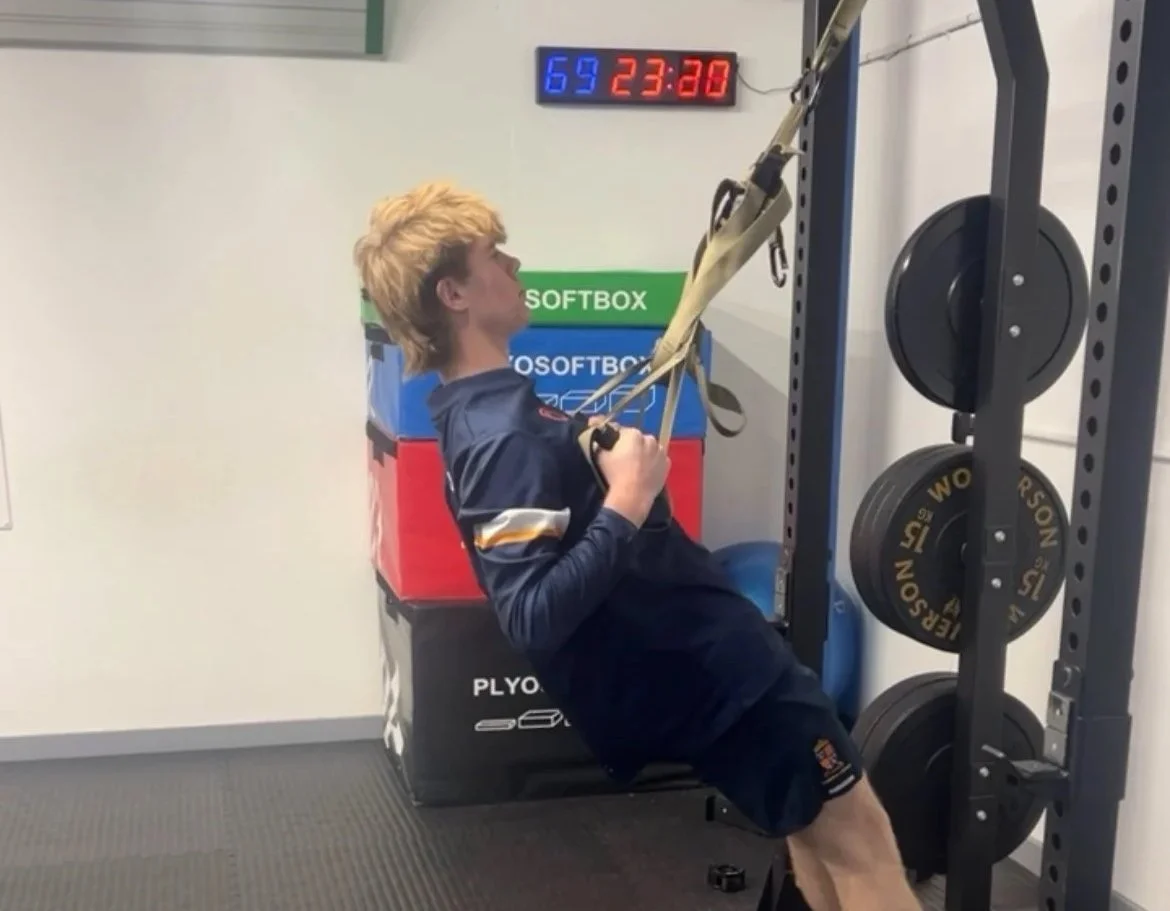
Hugh developing upper body strength safely to improve his cricket performance and reduce risk of future injuries
Safety: the biggest concern (and how to address it)
Parents naturally worry about safety. The evidence and professional position stands are clear: when programmes are properly designed and supervised by trained coaches, strength training is safe for children. Key safety points:
Qualified coaches who understand growth, maturity and technique are essential. Coaches should progress loads conservatively and prioritise technique.
Use age‑appropriate progressions: bodyweight → bands → light external load → structured resistance as the child matures.
Emphasise movement quality over load. The goal is competence and confidence, not heavy lifts early on.
Screen for medical issues and adapt programmes as needed. Keep open communication with parents and, where relevant, paediatricians.
This view is supported by both the UKSCA Position Stand (2014) and international consensus statements (Lloyd et al., 2014; NSCA, 2009), which conclude that the risk of injury from properly supervised resistance training is no greater than that of many youth sports.
Programme design principles (what top coaches do)
High-level, evidence-based coaches follow these principles when working with 8–16 year olds:
Assess movement quality first - (squats, lunges, single-leg balance, jumps)
Individualise progressions - based on maturation, not just chronological age
Use short, varied sessions - that are fun and engaging (1 hour commonly works)
Include multi-directional movement, balance and core control - as core elements
Teach failure-tolerant progressions - allow mistakes, give corrective feedback, celebrate improvement
Integrate strength work with play and sport‑specific skills - so kids stay motivated
Monitor load and recovery - younger kids need less frequent intense exposure than older adolescents
How strength training builds confidence and life skills
Strength training is uniquely well-suited to building transferable life skills: - Goal setting & progress tracking: kids see direct evidence of improvement - Failure and resilience: coaches create safe challenges where setbacks are normal and overcome with practice - Self-discipline and routine: regular sessions teach commitment and time-management - Social skills: group S&C fosters teamwork and positive coaching relationships.
These psychological gains (confidence, persistence, and self-efficacy) are as important as physical benefits and last well into adulthood.
Common myths
Myth 1: Strength training stunts growth.
This is a long-standing misconception. Research, including the UKSCA (2014) and NSCA (2009) position stands, shows no evidence that resistance training negatively impacts growth or damages growth plates when supervised by qualified coaches. In fact, it can promote healthy bone development through controlled loading.
Myth 2: Kids shouldn’t lift weights until they’re older.
Children as young as 7–8 can begin structured S&C using bodyweight and light resistance, focusing on technique and control. Load progression is gradual and based on physical maturity, not age alone (Lloyd et al., 2014).
Myth 3: Strength training is only for athletes.
While athletes benefit greatly, general youth populations also experience improved confidence, coordination, and health outcomes. S&C supports play, physical education, and injury prevention, not just competitive sport (Faigenbaum et al., 2009).
Myth 4: It’s unsafe compared to other activities.
Injury rates in supervised youth resistance training are significantly lower than in common sports like football or rugby (Faigenbaum & Myer, 2010).
Practical tips for parents
Choose coaches with youth S&C experience - and appropriate qualifications. Ask about child‑specific progressions and supervision ratios.
Start with 1–2 sessions per week of S&C - in addition to sport or play; increase gradually if the child enjoys it.
Encourage a balanced diet and sleep - kids need proper nutrition and sleep to support training adaptations.
Look for programmes that prioritise fun - games, challenges and variety improve adherence.
Keep communication open - share goals, injuries, illnesses, or concerns with the coach.
Final words to parents
Strength & conditioning, when done correctly, is one of the best gifts you can give a child’s physical and psychological development. It builds robust bodies, resilient minds, and the skillset to stay active for life. Start early, keep it fun, prioritise quality coaching, and you’ll be setting your child up for decades of health and confidence.
Key references
UK Strength and Conditioning Association (2014). UKSCA Position Statement on Youth Resistance Training.
National Strength and Conditioning Association (2009). Youth Resistance Training: Updated Position Statement.
Faigenbaum, A.D., & Myer, G.D. (2010). Resistance training among young athletes: safety, efficacy and injury prevention effects. British Journal of Sports Medicine.
Chaabene, H. et al. (2020). Performance- and health-related benefits of youth resistance training: an evidence-based approach. Journal of Sports Medicine.
Lloyd, R.S. et al. (2014). Position statement on youth resistance training: the 2014 International Consensus. British Journal of Sports Medicine.
Lubans, D.R. et al. (2016). The impact of resistance training on mental health and cognitive outcomes in youth. Sports Medicine.